A mixed load goes to a transfer station first
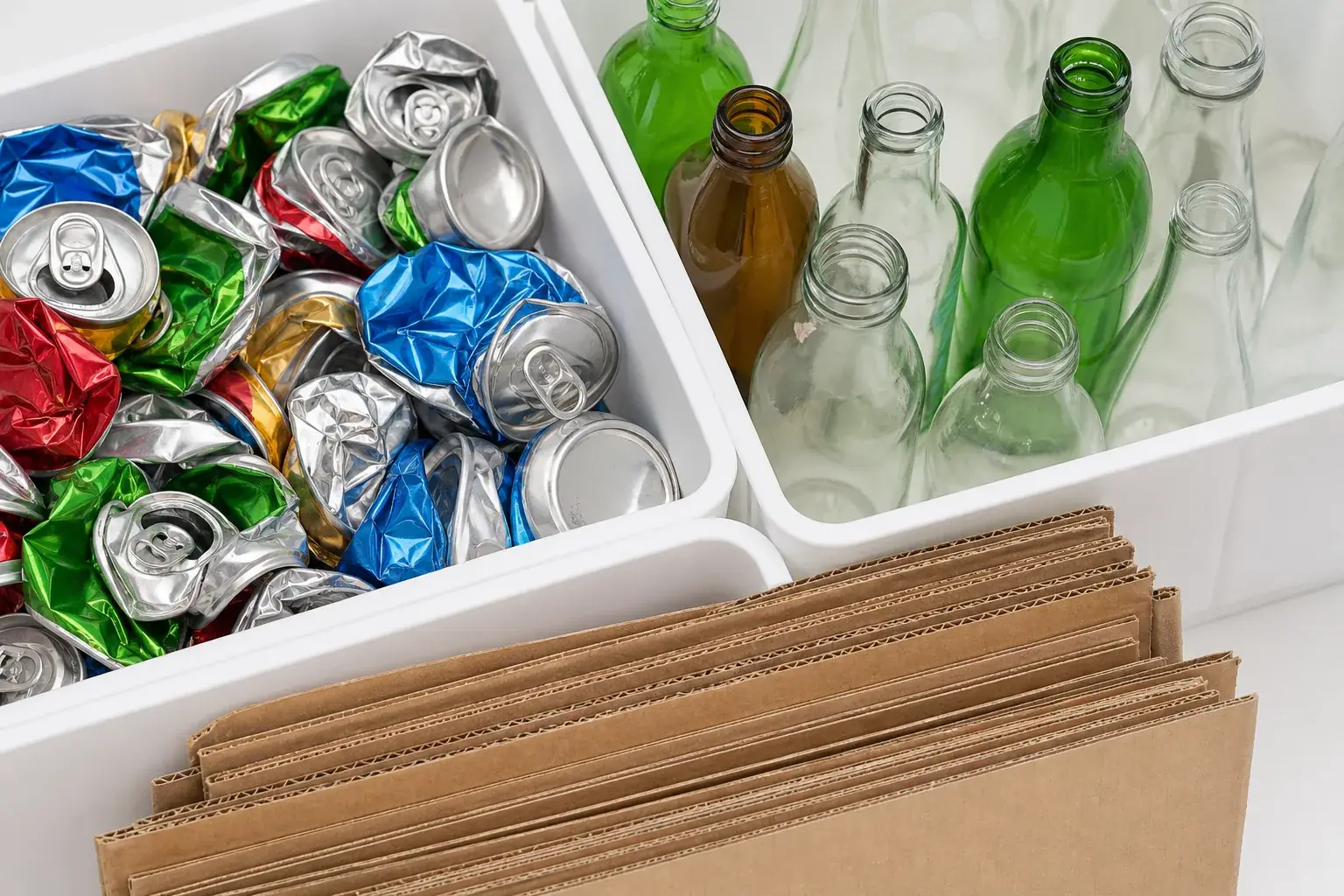
Almost nothing collected from a house or a site goes straight to its final destination. It goes to a waste transfer station, where it is tipped out and sorted, by machine and by hand, into separate streams. Each of those streams then leaves for a different facility.
This is the single reason that separating waste before collection saves money. A load that arrives already sorted costs less to process than one that has to be pulled apart, and that difference is reflected in what you are charged. It is also why a carrier who takes a mixed load and quotes a suspiciously low price is worth a second look, because the sorting has to be paid for by somebody.
The materials that genuinely recycle
Recycling is a word used loosely. These are the streams where the material really does come back as material.
- Metal. The best outcome in waste. Steel, aluminium, copper and brass can be melted and recast indefinitely with no loss of quality, and recycling aluminium uses a small fraction of the energy needed to produce it from ore. Metal is separated magnetically and by eddy current, and it has a positive value.
- Clean timber. Chipped and used for board manufacture, animal bedding or biomass fuel. Needs to be free of paint, preservative and fixings to reach the better grades.
- Cardboard and paper. Baled and pulped. Fibres shorten each time, so paper recycles several times rather than indefinitely, but the process is efficient and well established.
- Inert rubble. Brick, block and concrete are crushed into recycled aggregate and used as hardcore. Kept clean and separate this is one of the cheapest materials to dispose of.
- Green waste. Composted or digested. Clean green waste is straightforward; green waste mixed with plastic plant pots and timber is not.
- Plasterboard. Recycled back into new board, but only when kept entirely separate.
The materials that need special handling
Some streams are separated not because they are valuable but because they are controlled.
- Fridges and freezers. Refrigerant gases and the blowing agents in the insulation foam must be captured before the cabinet can be stripped for metal.
- Electricals. Handled under the WEEE regulations so that circuit boards, batteries and metals are recovered and hazardous components removed.
- Upholstered seating. Sofas, armchairs and office chairs contain persistent organic pollutants in their fire-retardant treatments. Since 2023 these have had to be kept separate and destroyed by incineration rather than landfilled.
- Batteries. A significant fire risk in general waste. Lithium cells crushed in a collection vehicle or a sorting line start fires, and this is now one of the most common causes of fires at waste facilities.
What residual waste actually means
Residual waste is what is left once everything recoverable has been pulled out. Realistically it is contaminated and mixed material: packaging bonded to food, textiles too degraded to reuse, composites that cannot be separated economically.
Most of it is now burned at energy from waste plants rather than landfilled, which recovers some energy and avoids the methane that organic waste produces when buried. It is better than landfill. It is still the worst of the available outcomes, which is the argument for separating properly at the point of collection rather than leaving it to be picked over later.
Questions worth asking a waste carrier
This is the part of the service you cannot verify by watching, so it is reasonable to ask about it directly.
- Are you registered with the Environment Agency as a waste carrier, and what is the registration number?
- Which transfer station or facility does my load go to?
- Is the load sorted, and roughly what proportion is diverted from landfill?
- What documentation will I get for the transfer?